

Joint Paper by Xiamen University and Fudan University on Controllable Synthesis of Void Defects in X-ray Images of CFRP Components Published in the Journal of Manufacturing Processes
2026-11-11
On November 11, 2026, a joint study by Xiamen University and Fudan University was published online in the Journal of Manufacturing Processes. The paper, titled “Controllable diffusion-based X-ray void defect synthesis for CFRP component quality inspection,” appears in Volume 179, pages 450–470. The study proposes a method for generating X-ray images of void defects with pixel-level annotations to support the inspection of carbon fiber reinforced polymer (CFRP) components.
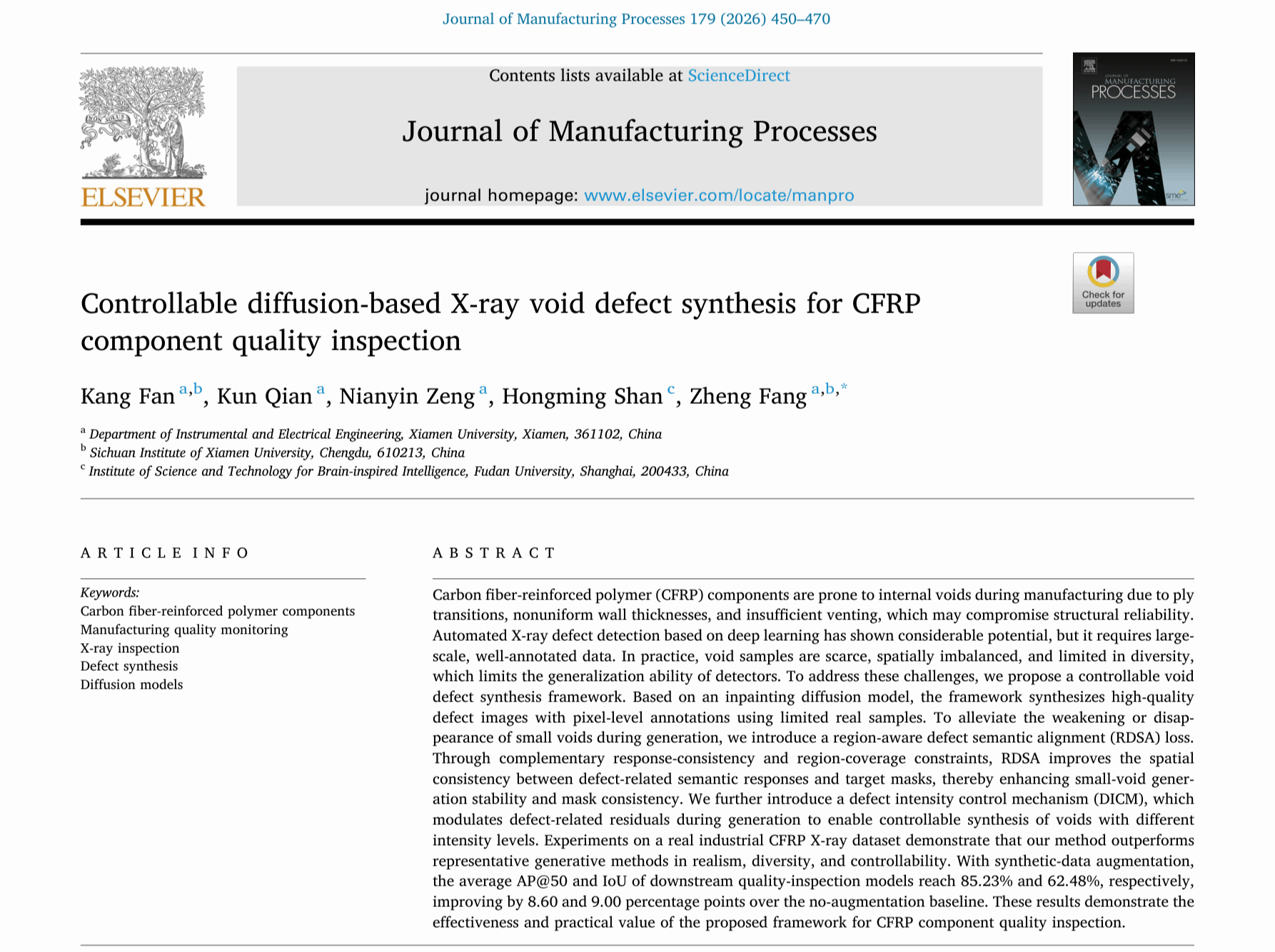
The study was published in the Journal of Manufacturing Processes.
Internal voids can form during the manufacture of CFRP components and compromise their structural reliability. Deep learning models can help detect these defects in X-ray images, but training them requires a diverse set of accurately annotated examples. In industrial datasets, real void samples are scarce and unevenly distributed across different regions of a component, making it difficult to capture the full range of defect locations, shapes, and visibility.
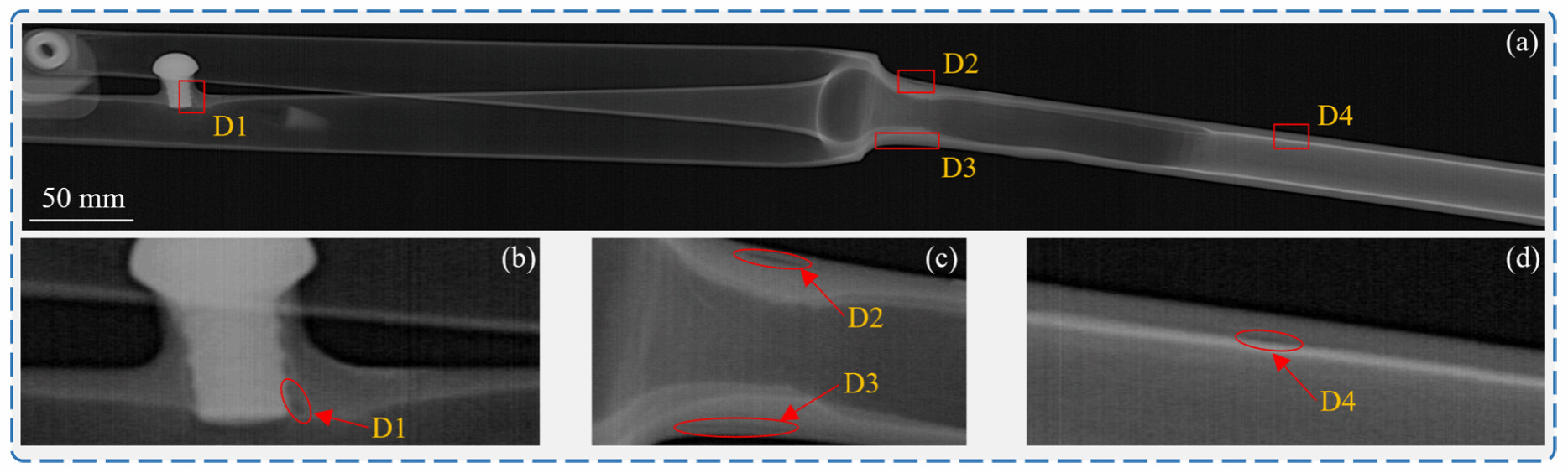
Figure 1. Representative void defects in X-ray images of CFRP components.
To address this shortage, the researchers developed a diffusion model that generates diverse defect images from a limited set of real examples. The overall framework is shown in Figure 2.
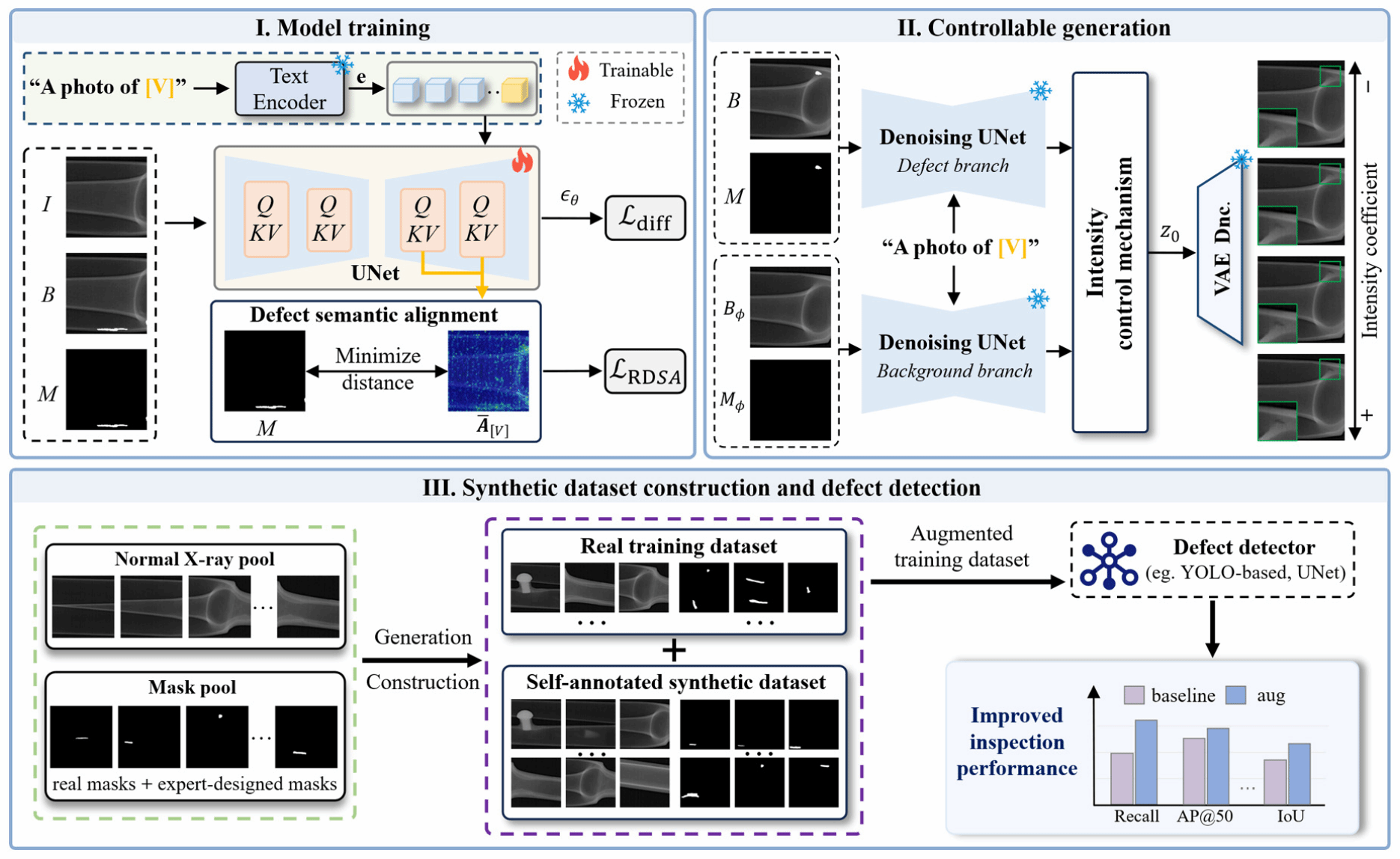
Figure 2. Diffusion-based framework for controllable void defect synthesis.
The study makes three main contributions:
First, the method uses masks to control void location and shape. A target mask specifies where the defect should appear and what shape it should take. The model synthesizes the defect while preserving the original structure outside the target region. The mask also provides a pixel-level annotation for training segmentation models.
Second, the method improves the generation of small voids. Small defects can become faint or disappear during image synthesis. To address this problem, the researchers introduced a region-aware defect semantic alignment loss (RDSA). It encourages the model to cover the target region while limiting the spread of defect features into the surrounding background, improving the match between the generated void and its mask.
Third, the method allows continuous adjustment of defect visibility. A defect intensity control mechanism (DICM) adjusts the contribution of defect-related information during denoising. This allows the model to generate voids ranging from faint to clearly visible, providing training examples with different levels of detection difficulty.
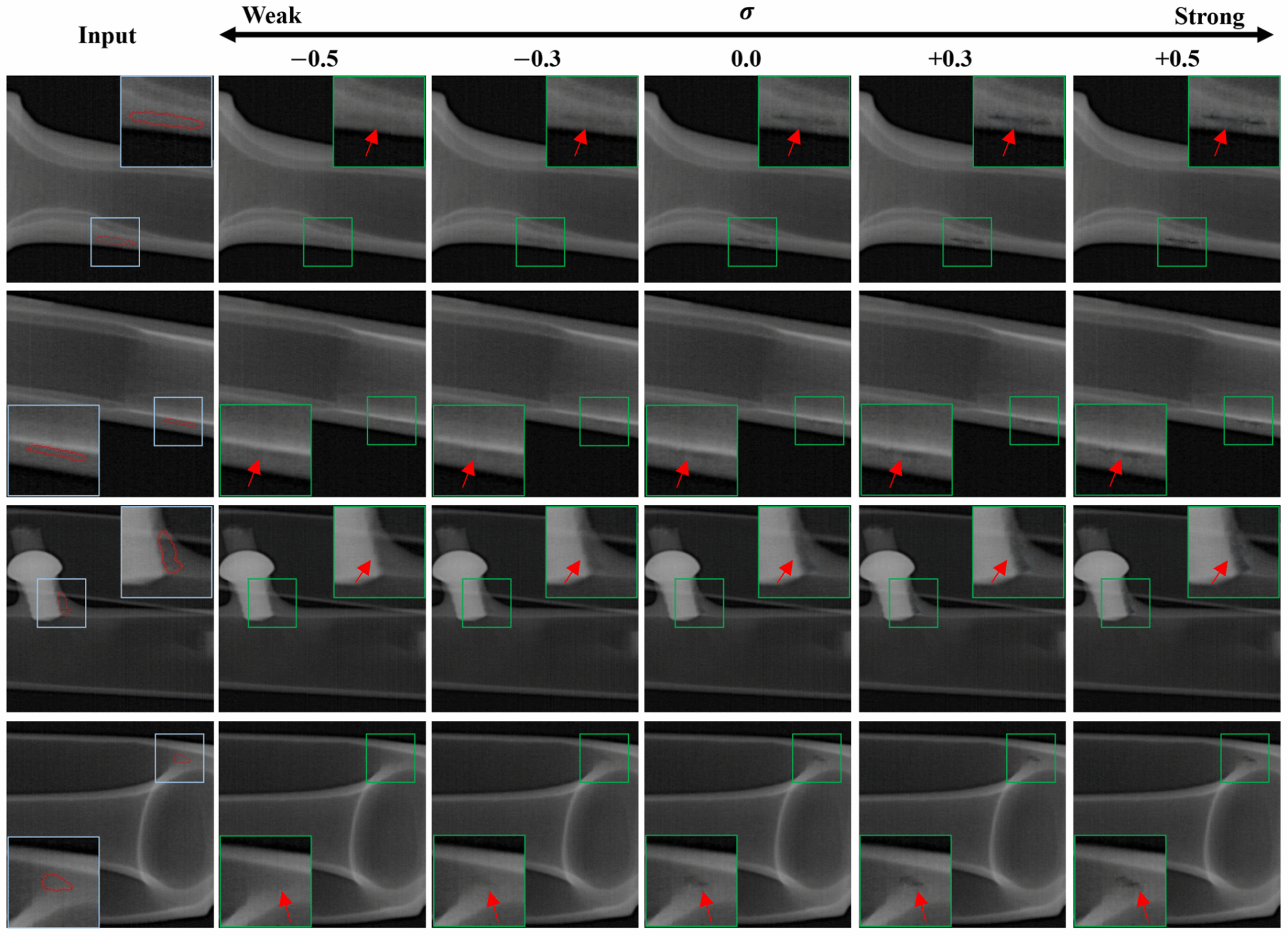
Figure 3. Void defects synthesized at different intensity control settings.
The researchers evaluated the method on a dataset of real industrial X-ray images of CFRP components. After synthetic samples were added to the training data, the YOLOv11m detection model achieved an average precision of 85.23% at an intersection-over-union threshold of 0.50 (AP@50), and the U-Net segmentation model achieved a mean intersection over union (IoU) of 62.48%. These figures represent gains of 8.60 and 9.00 percentage points, respectively, over training without data augmentation. Under the conditions tested, the synthetic samples supplemented the limited real defect data and improved both detection and segmentation.
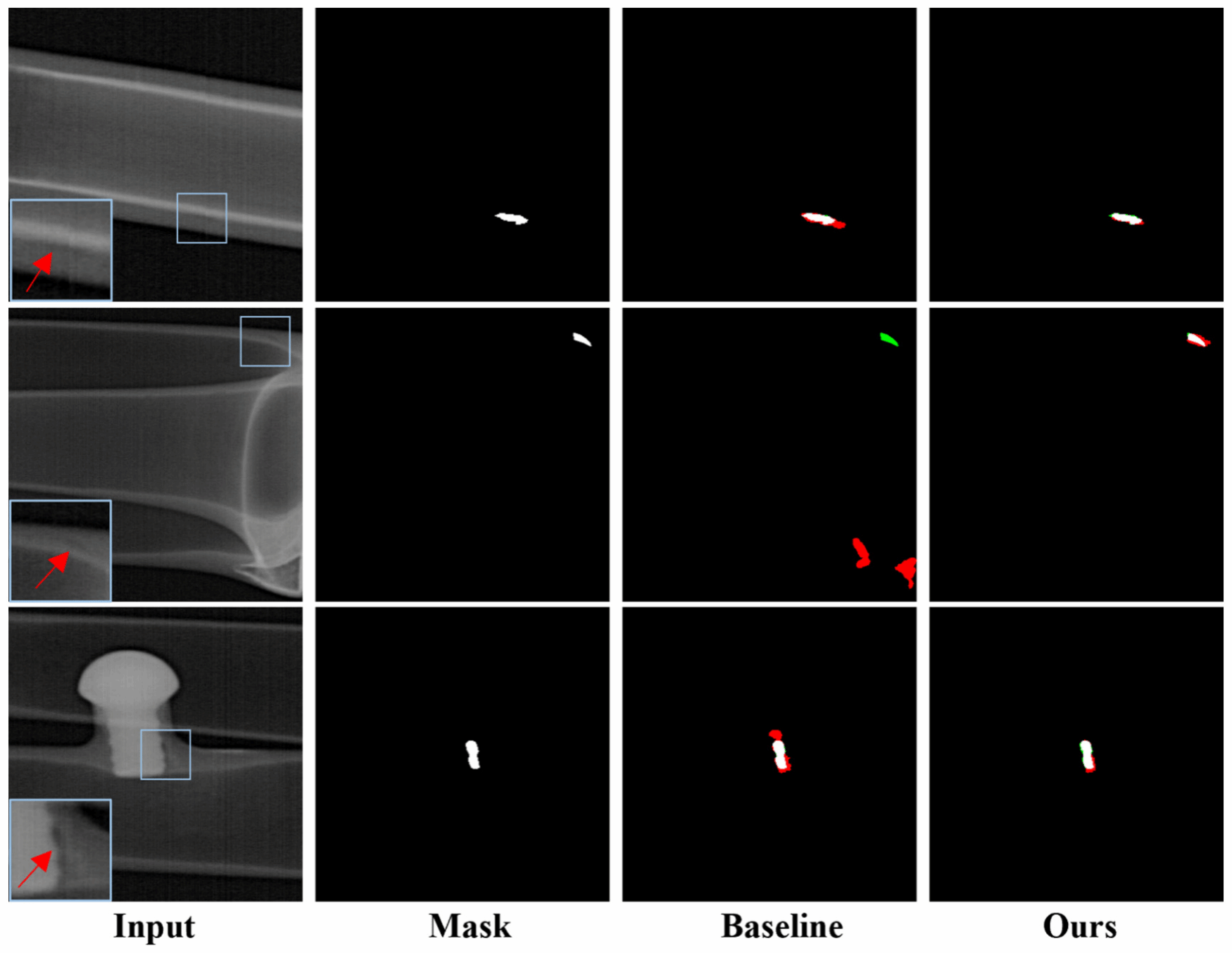
Figure 4. Comparison of void defect segmentation results with and without synthetic training samples.
Kang Fan is the first author, and Zheng Fang is the corresponding author. The coauthors are Kun Qian, Nianyin Zeng, and Hongming Shan of Fudan University. The research was supported by the National Natural Science Foundation of China and the Sichuan Science and Technology Program.
 Controllable diffusion-based X-ray void defect synthesis for CFRP component quality inspection.pdf