

Research Collaboration Between Xiamen University and the University of Birmingham Published in Analytical Chemistry
2026-10-23
Researchers from the X-ray High-End Equipment Laboratory at the School of Aerospace Engineering, Xiamen University, in collaboration with the University of Birmingham, UK, have developed a new approach to material recognition using hyperspectral X-ray computed tomography (HXCT). Their study, entitled “Retention-Based Hyperspectral X-ray CT for Material Recognition and Classification,” has been published in Analytical Chemistry, Volume 98, Issue 40, pages 29149–29155.
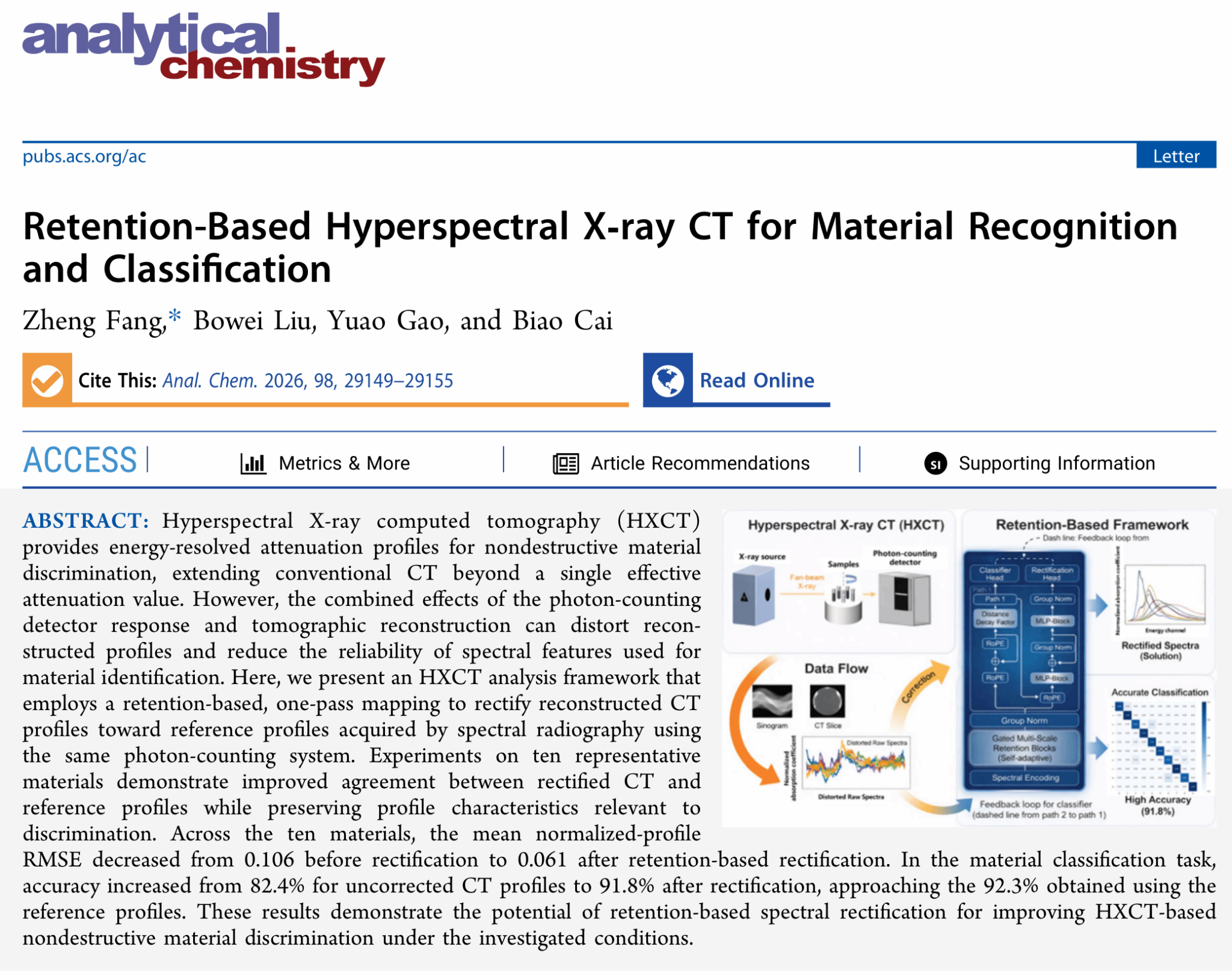
Figure 1. Research article published in Analytical Chemistry.
HXCT provides information about both the internal structure of a sample and its energy-dependent attenuation, supporting nondestructive material identification. However, photon-counting detector response, noise, and reconstruction-related errors can distort reconstructed spectral profiles, reducing the reliability of feature extraction and material classification. Correcting these distortions while preserving information relevant to material discrimination remains an important challenge.
To address this challenge, the team developed a retention-based framework that combines spectral rectification with material classification. The study makes three main methodological contributions.
First, the framework establishes a mapping from CT-derived profiles to reference profiles acquired using the same system. Spectral digital radiography (DR) measurements obtained with the same photon-counting system serve as the reference, allowing the model to learn how to reduce profile discrepancies associated with detector response and tomographic reconstruction. This provides more reliable spectral inputs for subsequent material classification.
Second, the method exploits relationships between energy channels to rectify spectral profiles in a single forward pass. A bidirectional distance-decay mechanism captures both local relationships between adjacent channels and longer-range interchannel correlations. Combined with multihead fusion and gated updates, the framework generates rectified profiles through a single nonautoregressive forward computation, offering a new approach to processing ordered multichannel spectral data.
Third, the study connects improvements in spectral agreement with material classification performance. In addition to measuring profile errors before and after rectification, the researchers compared classification results using the same fixed classifier. This evaluation assesses whether improved spectral agreement translates into better material recognition.
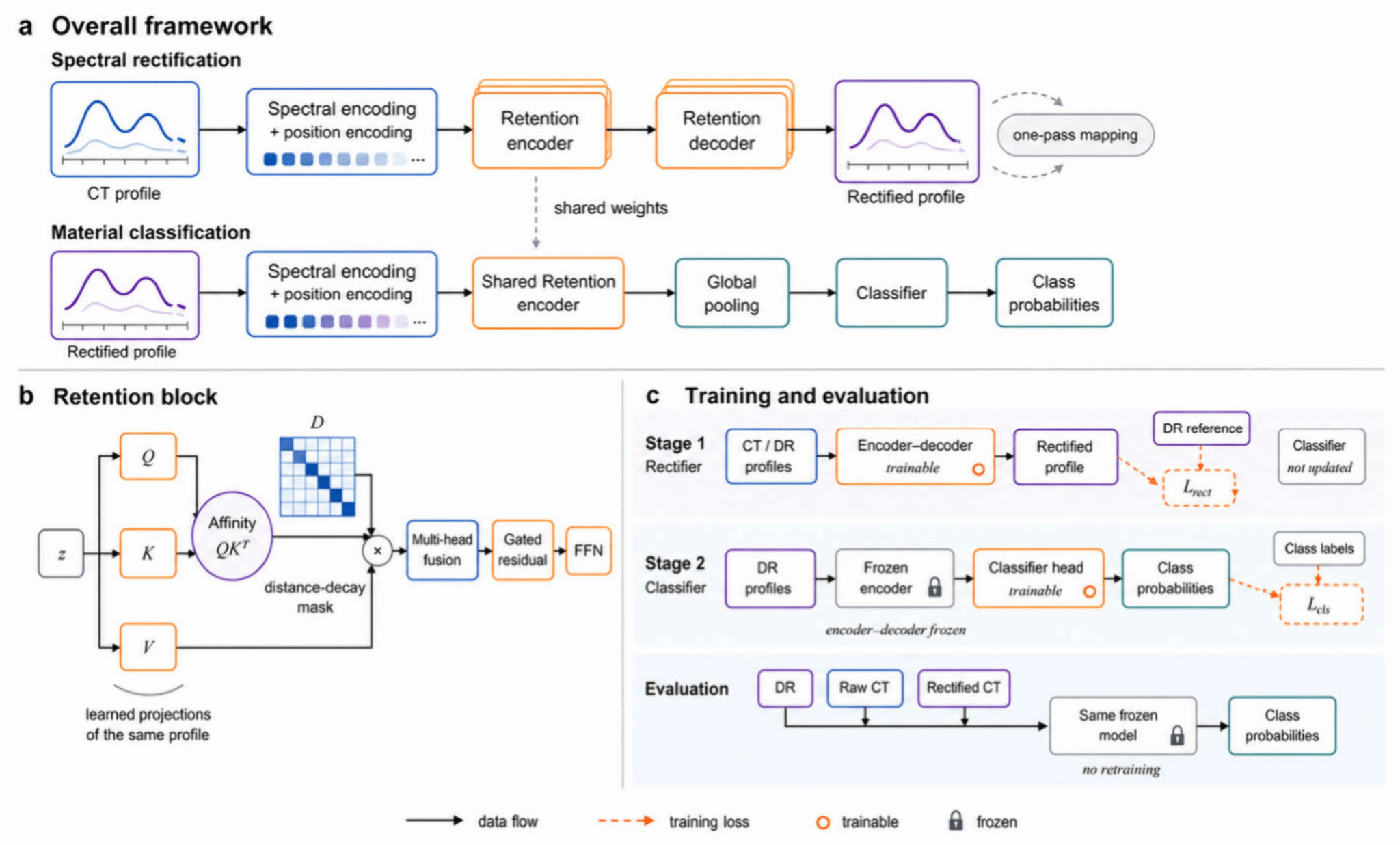
Figure 2. Retention-based framework for spectral rectification and material classification in hyperspectral X-ray CT.
Experiments involving ten representative materials, including inorganic salts and metallic powders, demonstrated the effectiveness of the approach. The mean root-mean-square error of the normalized profiles decreased from 0.106 to 0.061 after rectification. Material classification accuracy increased from 82.4% to 91.8%, an improvement of 9.4 percentage points, approaching the 92.3% achieved with the DR reference profiles. These results show that, under the investigated experimental conditions, the method improves agreement between CT-derived and reference profiles while enhancing material classification performance.
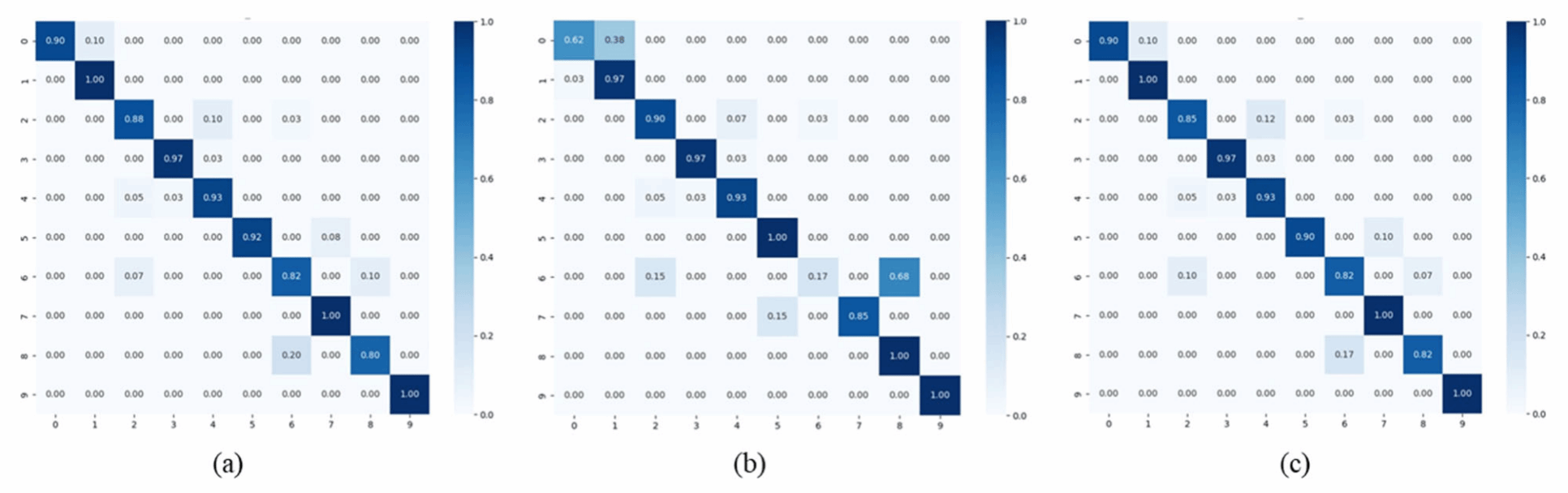
Figure 3. Comparison of material classification results using reference spectra, CT spectra before correction, and CT spectra after correction.
The study offers a new route for integrating HXCT with learning-based spectral analysis and provides experimental evidence for improving nondestructive material discrimination. Further research could examine a wider range of materials and acquisition conditions to assess the method’s applicability to more complex inspection scenarios.
Zheng Fang of Xiamen University is the first and corresponding author. Bowei Liu, Yuao Gao, and Biao Cai of the University of Birmingham are coauthors. The research was supported by the National Natural Science Foundation of China, the Sichuan Science and Technology Program, and the Fundamental Research Funds for the Central Universities, Xiamen University.
 Retention-Based Hyperspectral X-ray CT for Material Recognition and Classification.pdf